Search Engine Optimization (SEO) is the foundation of online visibility. Whether you’re running a blog, e-commerce site, or corporate website, SEO ensures your content reaches your audience organically. But with algorithms constantly evolving, the key to long-term success is sticking to tried-and-true principles.
Here are the Top 20 Golden Rules of SEO to dominate search rankings in 2025 and beyond.
The answer lies in following the Golden Rules of SEO—a set of timeless principles that form the backbone of effective optimization. These rules go beyond trends and algorithm updates; they focus on what really matters: understanding your users, creating valuable content, and optimizing the technical structure of your site.
From identifying the right keywords and writing compelling meta descriptions to building backlinks and improving page speed, these golden rules guide your SEO efforts in the right direction. They’re not just for ranking higher—they’re about creating better websites, delivering real value, and driving sustainable growth.
Importantly, SEO isn’t a one-time setup. It’s a long-term strategy that rewards consistency, relevance, and quality. Neglecting even one key rule—like mobile responsiveness or page load speed—can cost you visibility, traffic, and ultimately conversions.
In this guide, we break down the Top 20 Golden Rules of SEO that every website owner should follow in 2025 and beyond. These rules are practical, easy to implement, and aligned with what search engines—and your users—actually want.
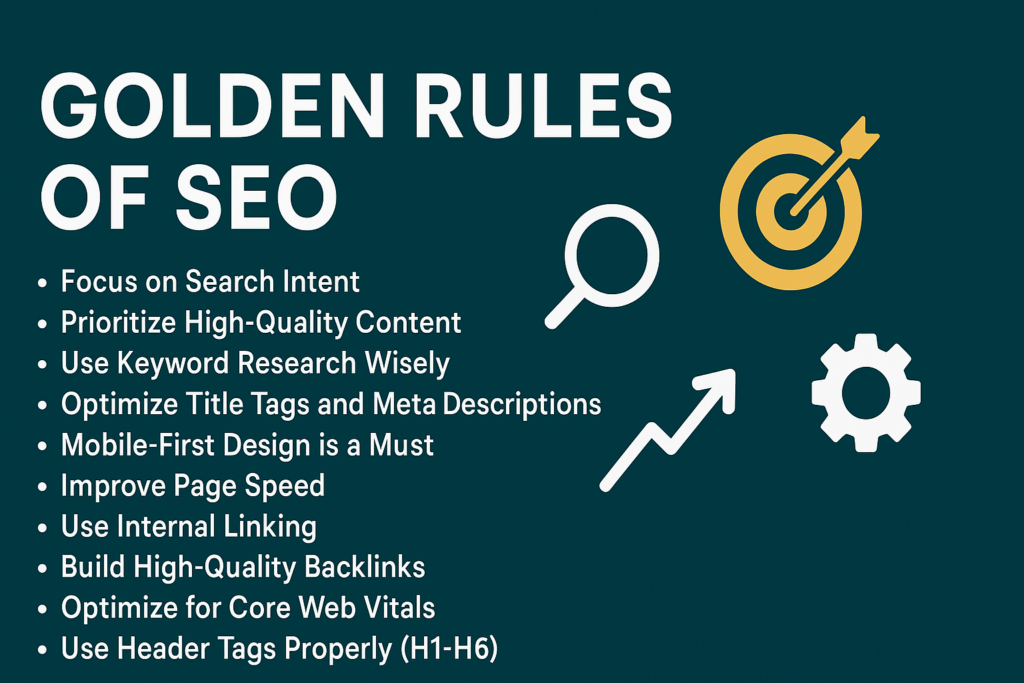
Type of Golden Rules For SEO
Whether you’re just starting out or refining your SEO strategy, this list will serve as a reliable checklist for success. Let’s dive in and unlock the full potential of your website with these proven SEO principles.
1. Focus on Search Intent
Understand why someone is searching. Are they looking for information, making a purchase, or comparing options? Align your content with the user’s goal to improve rankings and engagement.
2. Prioritize High-Quality Content
Content is still king. Provide original, in-depth, and valuable information that solves a problem or answers a question. Google rewards helpful content.
3. Use Keyword Research Wisely
Don’t stuff keywords. Instead, find relevant keywords with decent volume and intent. Use tools like Google Keyword Planner, Ahrefs, or Ubersuggest to guide your strategy.
4. Optimize Title Tags and Meta Descriptions
Your title tag and meta description are the first things users see. Make them catchy, relevant, and include your main keyword.
5. Mobile-First Design is a Must
Google indexes mobile versions of sites first. Your website must be responsive, fast, and easy to navigate on all devices.
6. Improve Page Speed
Slow pages hurt rankings and user experience. Use tools like Google PageSpeed Insights or GTmetrix to speed up your site.
7. Use Internal Linking
Link to other relevant pages on your site. This helps search engines crawl your website and keeps users engaged longer.
8. Build High-Quality Backlinks
Backlinks from authoritative, relevant sites are a major ranking factor. Focus on earning links through great content and ethical outreach.
9. Optimize for Core Web Vitals
Google’s Core Web Vitals measure user experience. Focus on loading performance, interactivity, and visual stability to boost your SEO.
10. Use Header Tags Properly (H1-H6)
Structure your content with proper headers. Use H1 for titles, H2 for main sections, and H3-H6 for subpoints. It helps both users and search engines.
11. Avoid Duplicate Content
Never copy content from other sites or even within your own. Google may penalize you, and it confuses your SEO authority.
12. Optimize Images
Use descriptive file names, alt text, and compressed images to improve load times and SEO. Don’t forget to make them accessible.
13. Update Old Content
SEO is not “set it and forget it.” Regularly update old posts with fresh data, keywords, and better formatting to stay relevant.
14. Use Clean and SEO-Friendly URLs
URLs should be short, descriptive, and include your primary keyword. Avoid random numbers or irrelevant strings.
15. Secure Your Site with HTTPS
Security is a ranking factor. An SSL certificate gives your users confidence and protects their data.
16. Create an XML Sitemap
Help Google index your site efficiently with a sitemap. Submit it via Google Search Console.
17. Eliminate Broken Links
Broken links ruin user experience and harm your SEO. Use tools like Screaming Frog or Ahrefs to find and fix them.
18. Optimize for Local SEO
If you serve local customers, claim your Google Business Profile, use local keywords, and get listed in local directories.
19. Use Schema Markup
Structured data helps search engines better understand your content and can earn you rich snippets in search results.
20. Track and Measure SEO Performance
Use tools like Google Analytics, Search Console, and Ahrefs to monitor your rankings, traffic, and keyword performance.
Final Thoughts
SEO isn’t about chasing algorithms. It’s about delivering the best user experience, providing value, and being consistent. By following these 20 golden rules of SEO, you build a strong, sustainable foundation for long-term search success.
Stay updated, adapt smartly, and always optimize for your audience.