








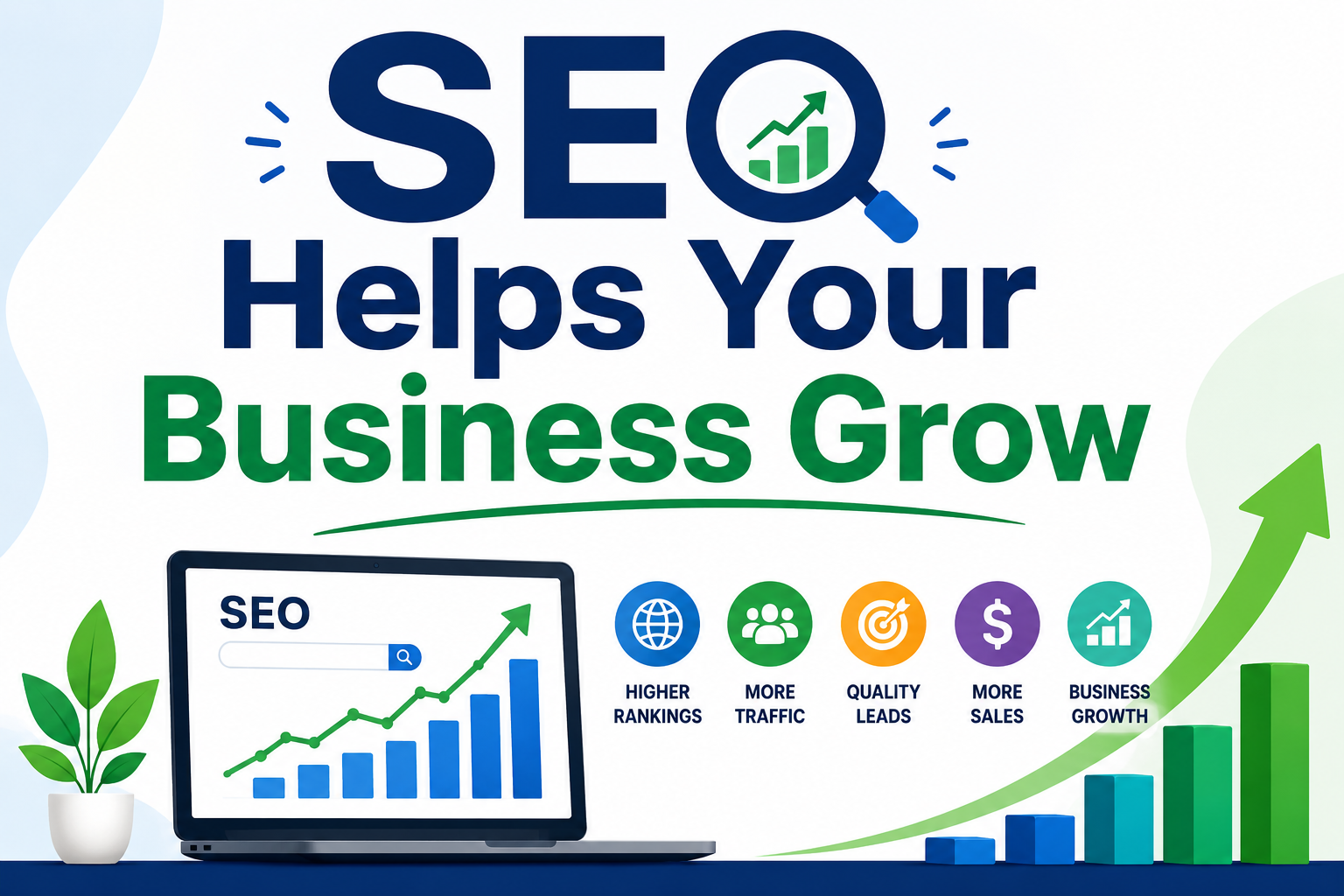
Having a website is only the first step toward building a successful business. If potential customers can’t find your website on search engines like Google, you’re missing valuable opportunities to generate traffic, leads, and sales. This is where Search Engine Optimization (SEO) plays a crucial role.
SEO helps businesses improve their online visibility, attract targeted visitors, and build long-term credibility without relying solely on paid advertising. Whether you own a small local business, an eCommerce store, or a large enterprise, investing in SEO can provide sustainable growth and a strong competitive advantage.
How SEO helps your business, why it’s important, and how it contributes to long-term success.
What Is SEO?
Search Engine Optimization (SEO) is the process of improving a website’s visibility in organic (non-paid) search engine results. It involves optimizing website content, technical performance, user experience, and online authority so search engines can better understand and rank your pages.
The goal of SEO is to connect your business with people who are actively searching for the products or services you offer.
Why Is SEO Important for Businesses?
Every day, millions of people use search engines to find information, compare products, and make purchasing decisions. If your business appears at the top of relevant search results, you’re more likely to attract qualified visitors who are ready to engage with your brand.
Unlike paid advertising, SEO continues delivering value over time by generating consistent organic traffic and building trust with your audience.
How SEO Helps Your Business
SEO offers numerous benefits that extend beyond improving search rankings. Here are the key ways it supports business growth.
1. Increases Website Visibility
One of the biggest advantages of SEO is improved visibility in search engine results.
When your website ranks higher for relevant keywords, more potential customers discover your business. Increased visibility helps you reach users at the exact moment they’re looking for solutions you provide.
2. Drives High-Quality Organic Traffic
SEO attracts visitors who are actively searching for products or services related to your business.
Unlike random website traffic, organic visitors often have higher purchase intent, making them more likely to become customers.
For example, someone searching for “best office interior design company” is already interested in hiring a service, making them a valuable lead.
3. Builds Brand Credibility and Trust
People tend to trust websites that appear on the first page of search results.
Ranking well signals that your business is relevant, authoritative, and trustworthy. Publishing helpful content and maintaining a secure, user-friendly website further strengthens your brand’s reputation.
4. Generates More Qualified Leads
SEO targets users based on their search intent.
Instead of interrupting people with advertisements, SEO connects your business with individuals already interested in what you offer. This often leads to higher-quality inquiries and better conversion rates.
5. Increases Sales and Revenue
Higher search rankings bring more targeted traffic, which can result in increased sales.
As more qualified visitors find your website, opportunities to generate leads, bookings, subscriptions, or purchases naturally grow.
SEO supports every stage of the customer journey—from awareness to conversion.
6. Delivers Long-Term Results
Unlike paid advertising, where traffic stops when your budget runs out, SEO provides lasting benefits.
A well-optimized website can continue attracting visitors for months or even years with regular maintenance and content updates, making SEO one of the most cost-effective digital marketing strategies.
7. Improves User Experience
Modern SEO emphasizes creating a positive experience for visitors.
Optimizing your website for speed, mobile devices, easy navigation, and clear content helps users quickly find the information they need.
A better user experience encourages visitors to stay longer, explore more pages, and complete desired actions.
8. Helps You Outperform Competitors
If your competitors are investing in SEO and you are not, they are likely attracting customers who could have found your business instead.
A strong SEO strategy helps you compete for valuable search terms, strengthen your online presence, and stand out in your industry.
9. Supports Local Business Growth
Local SEO helps businesses appear in location-based searches, making it easier for nearby customers to find them.
For example, when someone searches for:
- Best coffee shop near me
- Interior design company in Dhaka
- Digital marketing agency nearby
Businesses with effective local SEO are more likely to appear in local search results and map listings.
10. Enhances Brand Awareness
Even if users don’t click your website immediately, consistently appearing in search results increases brand recognition.
Over time, people become more familiar with your business, making them more likely to choose your brand when they’re ready to purchase.
11. Improves Website Performance
SEO includes technical improvements that benefit both users and search engines.
Examples include:
- Faster page loading
- Mobile-friendly design
- Secure HTTPS connection
- Better website structure
- Improved navigation
- Optimized images
These enhancements create a smoother browsing experience and support stronger search performance.
12. Provides Valuable Business Insights
SEO tools help businesses understand:
- What customers are searching for
- Which pages perform best
- How visitors interact with the website
- Which keywords drive traffic
- Where improvements are needed
These insights allow businesses to make informed marketing decisions and refine their strategies over time.
How SEO Supports Different Types of Businesses
Small Businesses
SEO helps small businesses compete with larger companies by attracting local customers and building online visibility without requiring a large advertising budget.
eCommerce Stores
SEO improves product visibility, attracts shoppers searching for specific products, and increases online sales through optimized category and product pages.
Service-Based Businesses
Businesses such as interior designers, law firms, consultants, and healthcare providers benefit from SEO by connecting with people actively searching for professional services.
B2B Companies
SEO helps B2B organizations generate qualified leads by publishing informative content that addresses industry challenges and decision-makers’ needs.
Key Components of an Effective SEO Strategy
Successful SEO combines several essential elements:
Keyword Research
Identify the terms your target audience uses when searching for products or services.
High-Quality Content
Publish helpful, original, and informative content that answers users’ questions and solves their problems.
On-Page SEO
Optimize title tags, meta descriptions, headings, images, URLs, and internal links.
Technical SEO
Ensure your website is fast, secure, mobile-friendly, and easy for search engines to crawl and index.
Off-Page SEO
Earn high-quality backlinks from reputable websites to build authority and credibility.
Local SEO
Optimize your business profile, collect customer reviews, and target location-based keywords if you serve a specific geographic area.
Common SEO Mistakes Businesses Should Avoid
To maximize SEO success, avoid these common errors:
- Ignoring keyword research
- Publishing duplicate or thin content
- Keyword stuffing
- Buying low-quality backlinks
- Neglecting technical SEO
- Having a slow-loading website
- Ignoring mobile optimization
- Failing to update outdated content
- Overlooking user experience
- Not tracking SEO performance
Tips for Improving Your Business SEO
Follow these best practices:
- Create valuable content consistently.
- Optimize every page for relevant keywords.
- Improve website loading speed.
- Make your website mobile-friendly.
- Build high-quality backlinks naturally.
- Strengthen internal linking.
- Keep your website secure with HTTPS.
- Regularly update existing content.
- Monitor performance using analytics and search performance tools.
- Focus on satisfying user intent rather than simply targeting keywords.
Frequently Asked Questions (FAQs)
How does SEO help a business grow?
SEO helps businesses grow by increasing online visibility, attracting qualified organic traffic, generating leads, improving brand credibility, and supporting long-term revenue growth.
Is SEO better than paid advertising?
SEO and paid advertising serve different purposes. Paid ads can generate immediate traffic, while SEO provides sustainable, long-term organic visibility. Many businesses achieve the best results by combining both strategies.
How long does SEO take to show results?
SEO is a long-term strategy. While some improvements may appear within a few months, significant results often require consistent effort over six to twelve months, depending on competition and your website’s current state.
Does every business need SEO?
Yes. Whether you operate locally or globally, SEO helps potential customers find your business online and supports long-term digital growth.
Conclusion
SEO is one of the most effective digital marketing investments a business can make. By improving search visibility, attracting qualified visitors, enhancing user experience, and building long-term authority, SEO creates a strong foundation for sustainable growth.
Success with SEO doesn’t happen overnight, but businesses that consistently publish valuable content, optimize their websites, and follow search engine best practices are better positioned to attract customers and stay competitive in an increasingly digital marketplace.
Whether you’re launching a new business or expanding an established brand, investing in SEO can help you reach more people, generate more leads, and achieve long-term online success.