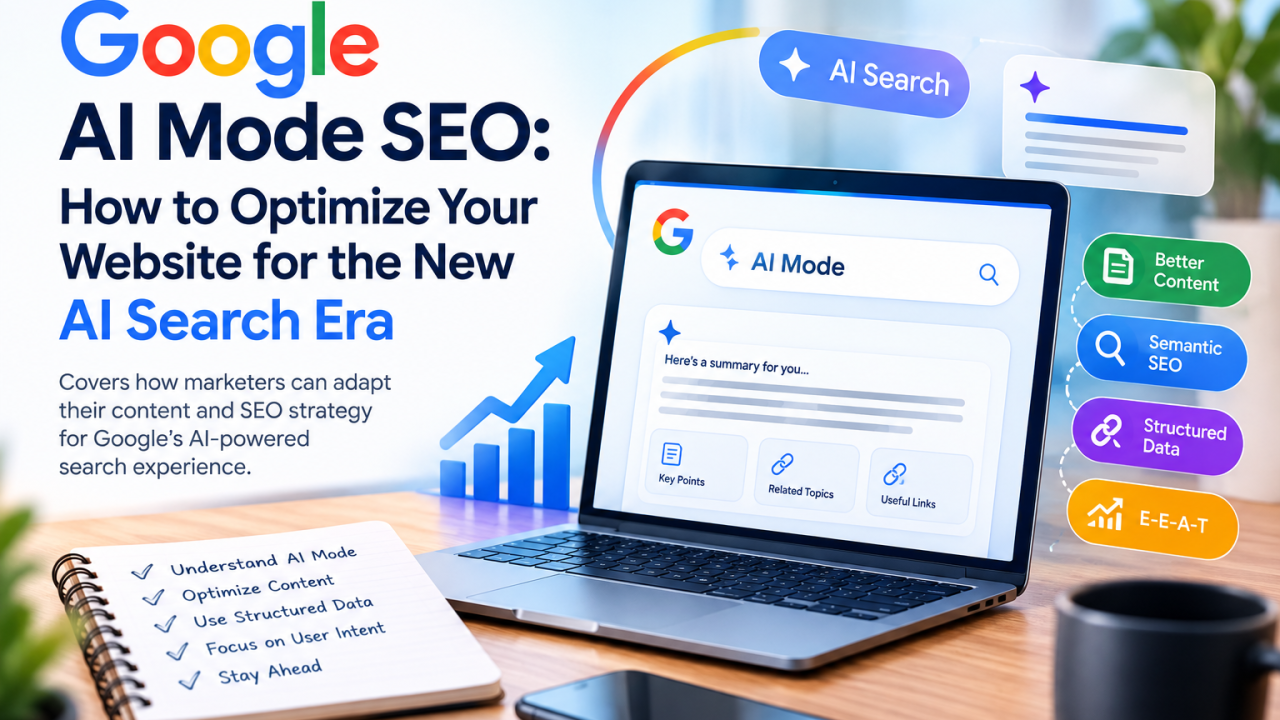








Artificial Intelligence is transforming how people search, discover, and interact with content online. Traditional SEO is no longer enough. Today, businesses must optimize for AI-driven search engines, chatbots, and answer engines to stay visible.
If you want your brand to appear in AI-generated answers from platforms like OpenAI, Google, and Microsoft, this guide will show you exactly how to improve your AI visibility step by step.
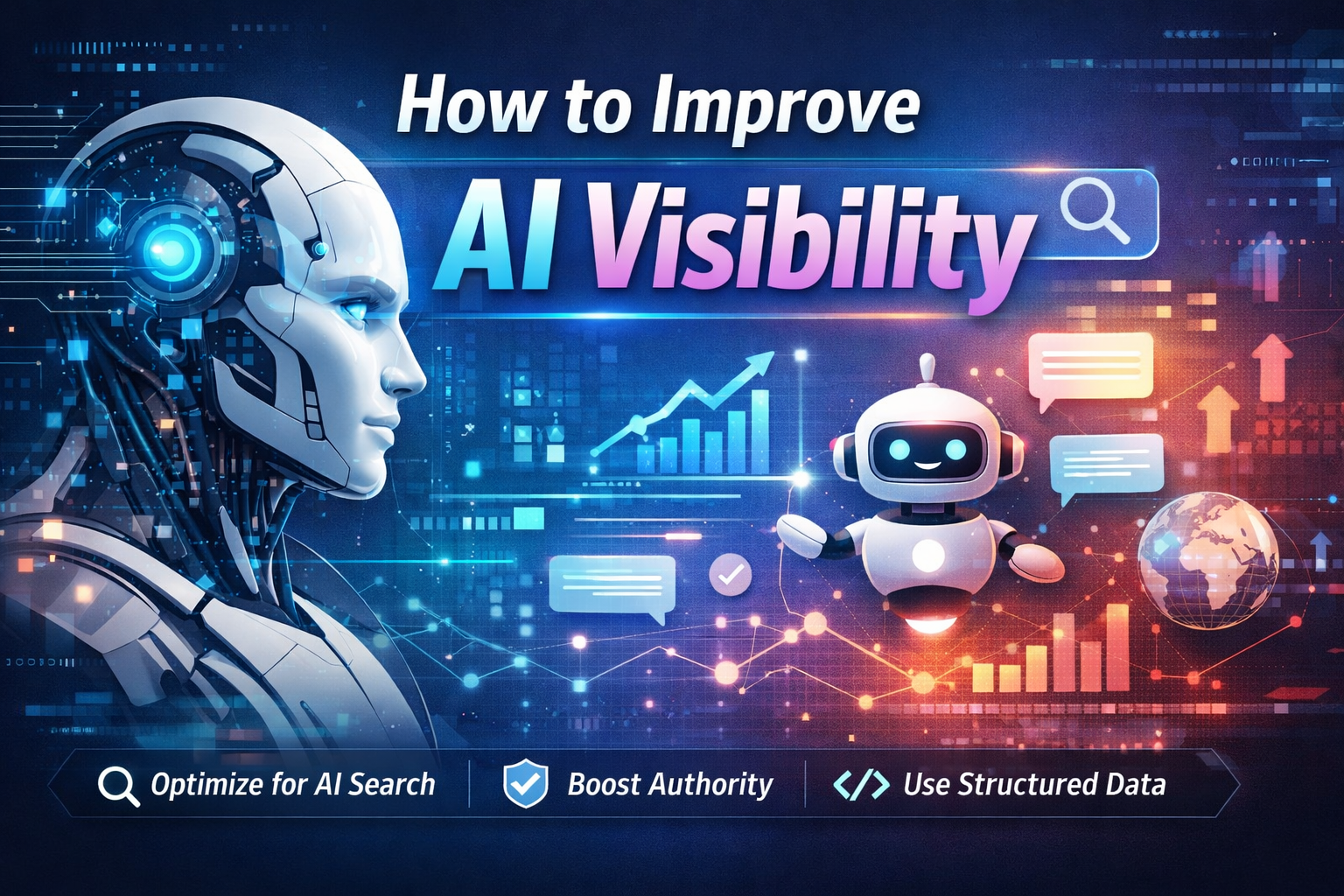
What Is AI Visibility?
AI visibility refers to how often and how accurately your brand, website, or content appears in AI-generated responses, search summaries, and conversational assistants.
Unlike traditional search engines that display blue links, AI systems:
-
Summarize information
-
Provide direct answers
-
Recommend products or services
-
Pull structured data from trusted sources
If your content isn’t optimized for AI systems, you risk becoming invisible in the next generation of search.
Why AI Visibility Matters More Than Traditional SEO
Search is evolving rapidly. With AI-powered search features such as:
SEO for ChatGPT Search: Optimizing Content for AI-driven Platforms
-
Google Search Generative Experience
-
Bing Copilot
-
ChatGPT
Users are receiving instant, summarized answers instead of clicking multiple websites.
This means:
-
Fewer organic clicks
-
Higher competition for AI citations
-
Greater importance of authority and clarity
If AI doesn’t recognize your content as trustworthy and structured, it won’t use it in responses.
1. Create High-Authority, Expert-Level Content
AI systems prioritize:
-
Clear explanations
-
Authoritative sources
-
Expert-backed insights
-
Data-driven content
To improve AI visibility:
✔ Publish in-depth guides
✔ Include statistics and research
✔ Add expert quotes
✔ Use clear headings and structure
The more comprehensive your content, the more likely AI tools will extract information from it.
2. Optimize for Answer-Based Queries (AEO)
AI systems focus on answering questions. That’s why Answer Engine Optimization (AEO) is critical.
How to optimize:
-
Use question-based headings (H2, H3)
-
Provide direct answers in the first paragraph
-
Add FAQ sections
-
Use concise, structured responses
Example:
Instead of writing vague paragraphs, directly answer:
What is AI visibility?
AI visibility is the ability of your content to appear in AI-generated search answers and summaries.
Clear answers increase your chances of being cited.
3. Use Structured Data (Schema Markup)
AI models rely heavily on structured data to understand context.
Implement:
-
FAQ Schema
-
Article Schema
-
Product Schema
-
Organization Schema
Structured data helps AI systems interpret:
-
Who you are
-
What your content covers
-
Your credibility
This improves your chances of appearing in AI summaries.
4. Strengthen Topical Authority
AI prefers websites that demonstrate deep expertise in a subject area.
Instead of publishing random topics, build content clusters around one niche.
Example structure:
Main Topic: AI Optimization
-
What is AI Visibility?
-
AI Search Ranking Factors
-
AI Content Optimization Guide
-
AI SEO vs Traditional SEO
When your website becomes a trusted source in one area, AI is more likely to reference it.
5. Improve E-E-A-T Signals
AI systems evaluate Experience, Expertise, Authoritativeness, and Trustworthiness (E-E-A-T).
Boost E-E-A-T by:
-
Adding author bios
-
Showing credentials
-
Citing reliable sources
-
Earning quality backlinks
-
Displaying real business information
Trust signals matter more than ever in AI-powered search.
6. Optimize for Natural Language
AI models understand conversational language better than keyword stuffing.
Instead of:
“Best AI visibility SEO improve AI ranking visibility strategy”
Write:
“Here’s how you can improve your AI visibility using modern optimization techniques.”
Focus on:
-
Natural tone
-
Context-rich explanations
-
Semantic keywords
-
Long-tail queries
7. Build Brand Mentions Across the Web
AI systems learn from multiple sources.
Improve visibility by:
-
Getting mentioned in industry blogs
-
Publishing guest posts
-
Appearing in interviews
-
Being listed in trusted directories
The more your brand appears in credible sources, the more likely AI tools will recognize it.
8. Optimize Technical Performance
AI systems still rely on technical SEO foundations:
-
Fast page speed
-
Mobile responsiveness
-
Secure HTTPS
-
Clean site architecture
-
XML sitemaps
Poor technical performance reduces crawlability and AI understanding.
9. Create Data-Driven, Original Content
AI prioritizes unique insights over generic content.
You can stand out by:
-
Publishing original research
-
Sharing case studies
-
Conducting surveys
-
Presenting unique statistics
Original data increases citation potential in AI-generated responses.
10. Monitor AI Mentions and Adapt
AI search is evolving fast. Monitor:
-
Whether AI tools mention your brand
-
What competitors are being cited
-
What type of content is summarized
Adapt your content based on what AI systems prioritize.
AI Visibility vs Traditional SEO: Key Differences
| Traditional SEO | AI Visibility |
|---|---|
| Focuses on ranking pages | Focuses on being cited in answers |
| Keyword-heavy | Context-focused |
| Blue link clicks | AI summaries |
| Backlink-driven | Authority + clarity-driven |
You still need SEO—but AI visibility requires deeper optimization.
The Future of AI Visibility
AI-powered search is not temporary—it’s the new standard.
Companies that adapt early will:
-
Dominate AI answers
-
Build stronger authority
-
Capture higher-intent users
-
Future-proof their traffic
AI visibility is about becoming the most trusted and structured source of information in your niche.
Final Thoughts
Improving AI visibility requires more than keywords. It demands:
-
Clear answers
-
Structured data
-
Authority building
-
Natural language optimization
-
Technical excellence
If you combine traditional SEO with AI-focused optimization strategies, your brand can thrive in the age of AI-driven search.