








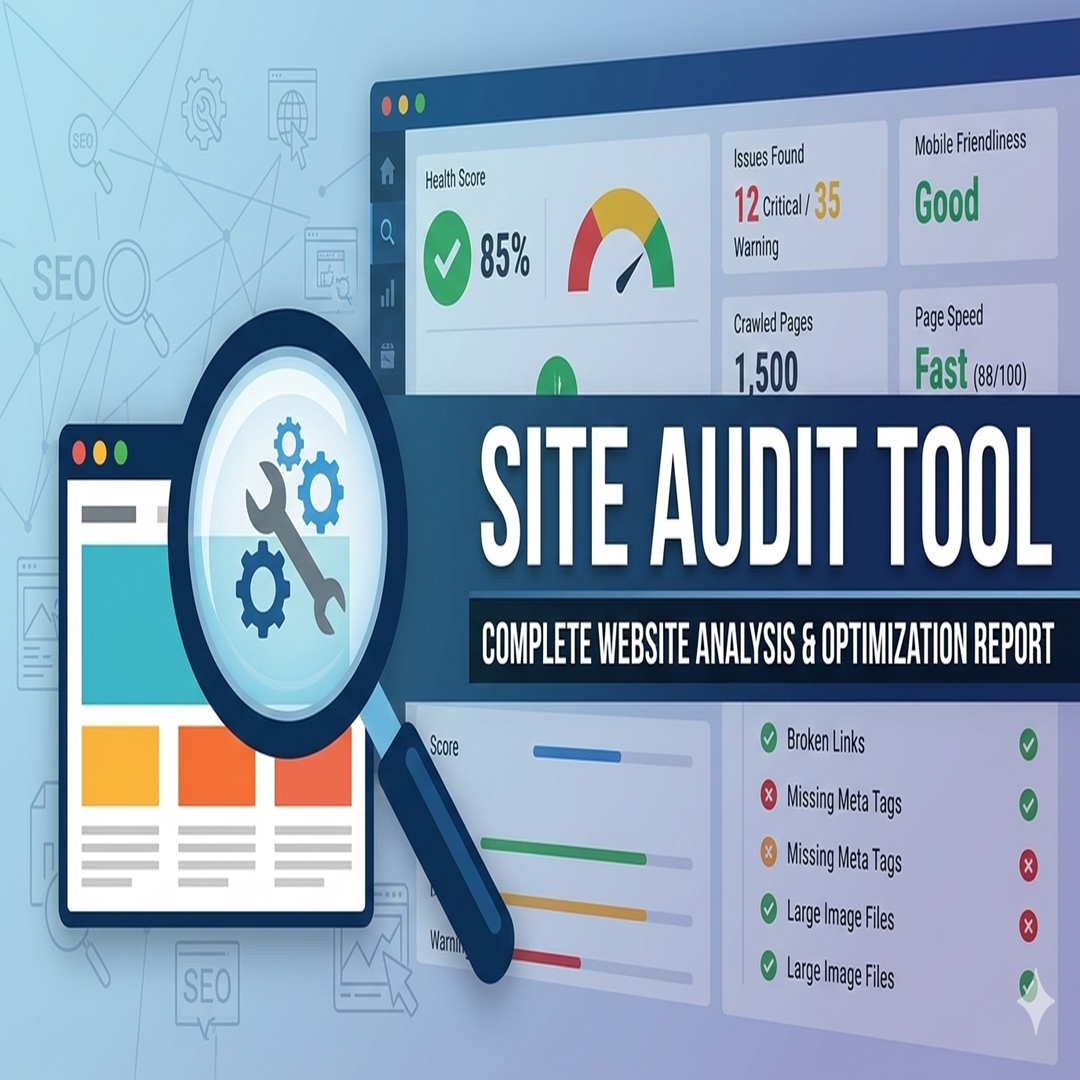
A Site Audit Tool is essential for any website owner, SEO professional, or digital marketer who wants to ensure their website is healthy, optimized, and performing at its best. It provides a comprehensive analysis of your website’s technical, on-page, and off-page SEO factors, helping you identify issues that could affect search rankings, user experience, and overall online visibility.
What a site audit tool is, why it matters, key features, and how to use it to improve your website performance.
What Is a Site Audit Tool?
A site audit tool is software that scans your website to detect SEO, technical, and usability issues. It evaluates factors that affect your site’s performance, including:
-
Broken links and redirects
-
Page speed and mobile-friendliness
-
Meta tags and headings
-
Duplicate content
-
Crawl errors
-
Security issues (HTTPS, SSL)
By identifying these problems, a site audit tool helps you optimize your website for search engines and users a like tools.
Why Use a Site Audit Tool?
Using a site audit tool is crucial for several reasons:
-
Improve SEO Rankings
Detecting and fixing SEO issues ensures search engines can crawl, index, and rank your pages effectively. -
Enhance User Experience
A site audit can reveal slow pages, broken links, and navigation problems that frustrate visitors. -
Identify Technical Errors
Issues like duplicate content, missing meta tags, or 404 errors can hurt your SEO and credibility. -
Boost Website Performance
Auditing page speed, mobile responsiveness, and core web vitals helps improve overall site performance. -
Monitor Ongoing Health
Regular site audits ensure your website remains optimized and compliant with evolving SEO standards.
Key Features of a Site Audit Tool
Modern site audit tools come with a variety of features, including:
1. SEO Analysis
-
On-page SEO checks (meta titles, descriptions, headers)
-
Keyword optimization suggestions
-
Internal linking analysis
2. Technical SEO
-
Crawlability and indexing issues
-
Sitemap and robots.txt evaluation
-
Duplicate content detection
-
HTTPS and SSL verification
3. Performance Monitoring
-
Page speed and load time analysis
-
Mobile-friendliness and responsive design checks
-
Core Web Vitals assessment
4. Security Checks
-
Malware or virus detection
-
SSL certificate validation
-
Vulnerability scans
5. Reporting & Recommendations
-
Detailed error reports
-
Actionable optimization suggestions
-
Historical tracking for performance improvement
How to Use a Site Audit Tool
Using a site audit tool is simple and typically involves three main steps:
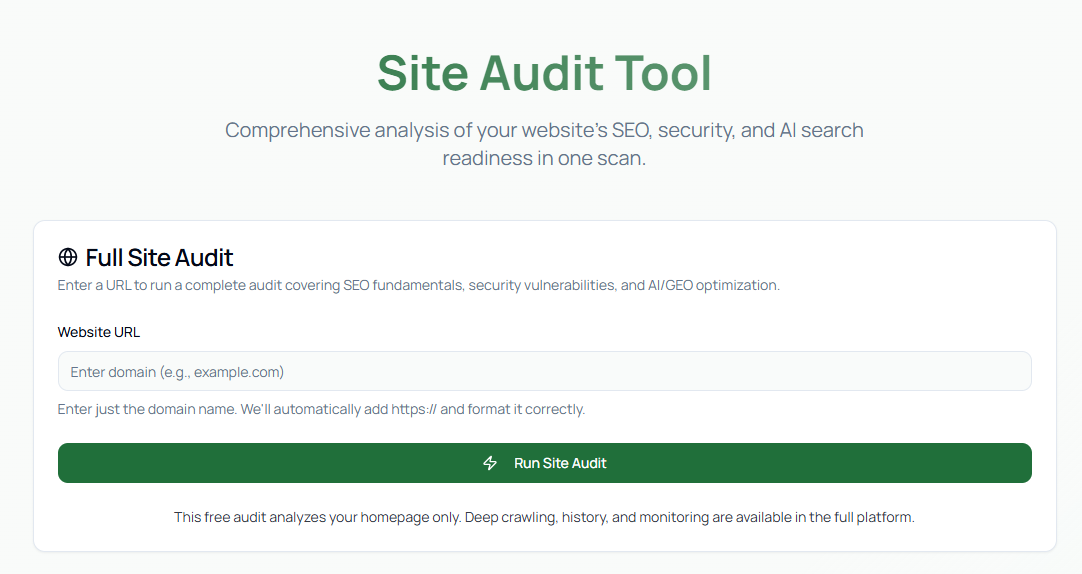
1. Enter Your Website URL
Start by entering your website address into the audit tool. Most tools allow you to audit the entire site or specific pages.
2. Run the Scan
The tool will crawl your website, identify issues, and analyze your SEO, performance, and technical metrics.
3. Review the Report and Fix Issues
The tool generates a detailed report highlighting:
-
Critical errors (must fix immediately)
-
Warnings (issues to address soon)
-
Recommendations (improvements to consider)
After reviewing, implement the suggested fixes to improve your site’s health and search engine rankings.
Popular Site Audit Tools
Here are some widely used site audit tools:
-
SEMrush Site Audit – Comprehensive SEO audit with actionable insights.
-
Ahrefs Site Audit – Detects technical issues and monitors site health.
-
Screaming Frog SEO Spider – Detailed crawl analysis for SEO professionals.
-
Google Search Console – Free tool for indexing, performance, and error monitoring.
-
Moz Pro Site Crawl – Identifies SEO and technical issues for website optimization.
Best Practices for Site Audits
-
Perform audits regularly (monthly or quarterly)
-
Prioritize critical errors first
-
Track improvements over time
-
Combine audit findings with AI SEO tools for content optimization
-
Ensure mobile responsiveness and page speed are consistently high
Final Thoughts
A site audit tool is an essential part of modern SEO and website management. By regularly auditing your website, identifying issues, and implementing fixes, you can:
-
Boost search engine rankings
-
Improve user experience
-
Enhance website security
-
Optimize performance and speed
Consistent audits keep your website healthy and competitive in an ever-evolving digital tools.