








Search Engine Optimization (SEO) is the foundation of digital marketing. It helps websites improve their visibility in search engine results, attract organic traffic, and convert visitors into customers. Whether you run a business website, blog, or eCommerce store, understanding the core pillars of SEO is essential for long-term online success.
You’ll learn about the three pillars of SEO, the different types of SEO techniques, and the primary objectives of SEO.
What Is SEO?
SEO (Search Engine Optimization) is the practice of optimizing a website to improve its ranking on search engines like Google, Bing, and Yahoo. The goal is to increase organic (non-paid) traffic by making your website more relevant, authoritative, and user-friendly.
SEO involves optimizing website content, improving technical performance, building quality backlinks, and delivering an excellent user experience.
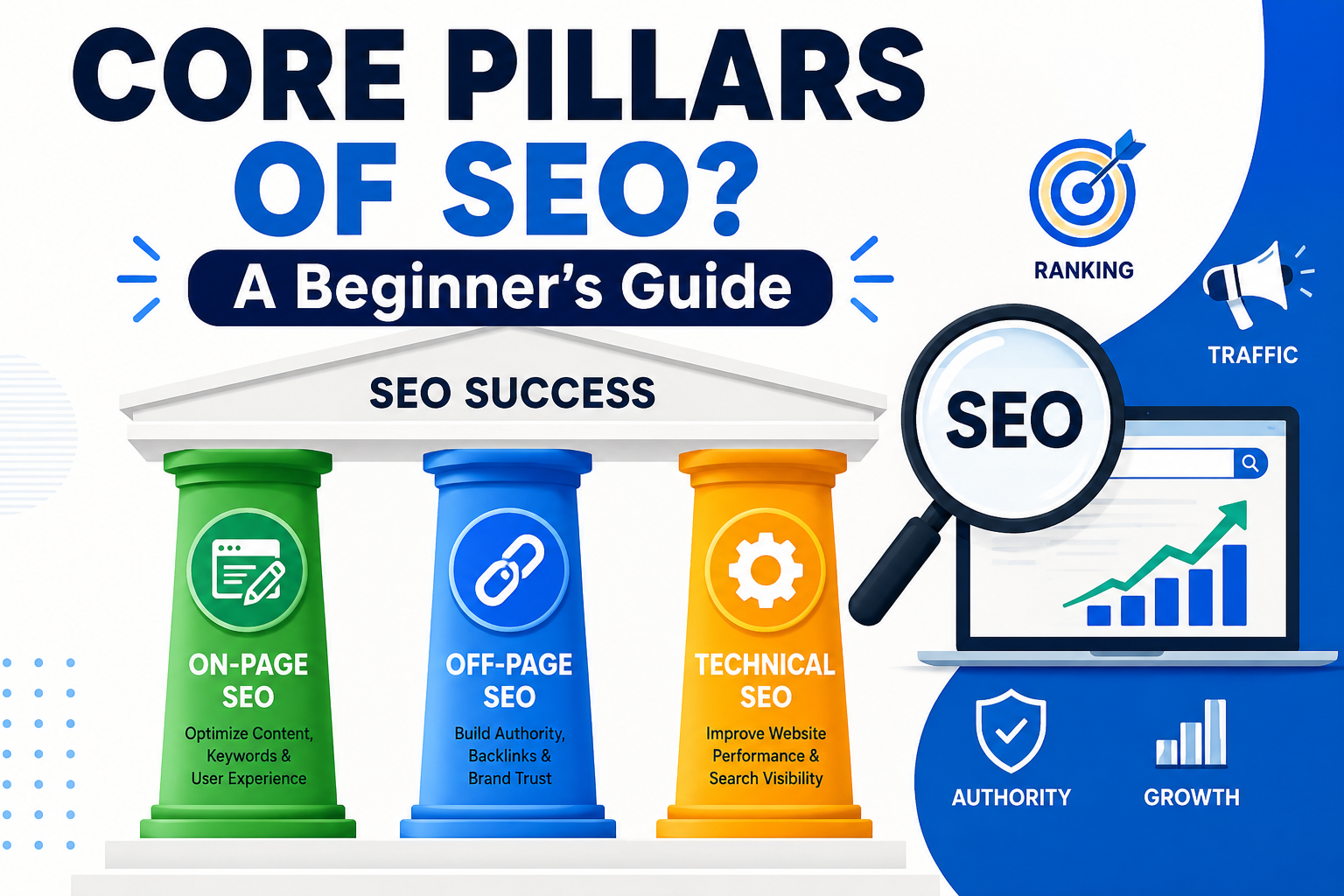
What Are the Three Pillars of SEO?
The three core pillars of SEO are:
- On-Page SEO
- Off-Page SEO
- Technical SEO
Together, these pillars create a strong SEO strategy that helps search engines understand, index, and rank your website effectively.
1. On-Page SEO
On-page SEO refers to all the optimizations you make directly on your website to improve search engine rankings and enhance user experience.
Key Elements of On-Page SEO
- Keyword research and optimization
- High-quality, original content
- SEO-friendly title tags
- Meta descriptions
- Proper heading structure (H1, H2, H3)
- Internal linking
- Image optimization
- URL optimization
- Content readability
- User intent optimization
Why On-Page SEO Matters
Search engines analyze your content to determine whether it matches a user’s search intent. Well-optimized pages are more likely to rank higher because they provide valuable information and a better user experience.
2. Off-Page SEO
Off-page SEO includes activities performed outside your website to improve its authority, credibility, and trustworthiness.
Common Off-Page SEO Techniques
- Guest posting
- Link building
- Brand mentions
- Social media promotion
- Digital PR
- Influencer outreach
- Local citations
- Online directory submissions
- Content marketing
Why Off-Page SEO Matters
Backlinks from trusted and relevant websites act as votes of confidence. High-quality backlinks help search engines view your website as authoritative, which can improve rankings.
3. Technical SEO
Technical SEO focuses on optimizing the technical aspects of your website so search engines can crawl, index, and understand it efficiently.
Important Technical SEO Factors
- Website speed optimization
- Mobile responsiveness
- Secure HTTPS connection
- XML sitemap
- Robots.txt optimization
- Structured data (Schema Markup)
- Canonical tags
- Crawl error fixes
- Core Web Vitals optimization
- Clean website architecture
Why Technical SEO Matters
Even the best content may struggle to rank if search engines cannot properly access or understand your website. Technical SEO ensures your site performs efficiently for both users and search engines.
Types of SEO Techniques
SEO techniques can be categorized into several areas based on optimization methods.
1. On-Page SEO
Optimizing content and HTML elements on your website.
Examples include:
- Keyword optimization
- Title tags
- Meta descriptions
- Internal linking
- Content optimization
2. Off-Page SEO
Building authority through external signals.
Examples include:
- Link building
- Guest blogging
- Brand mentions
- Social media engagement
3. Technical SEO
Improving the website’s infrastructure.
Examples include:
- Faster loading speed
- Mobile optimization
- Schema markup
- Crawl optimization
4. Local SEO
Local SEO helps businesses appear in location-based searches.
Examples include:
- Google Business Profile optimization
- Local citations
- Customer reviews
- Local keyword targeting
- Location pages
Ideal for:
- Restaurants
- Interior design companies
- Medical clinics
- Law firms
- Local service businesses
5. E-commerce SEO
Designed specifically for online stores.
Includes:
- Product page optimization
- Category page optimization
- Product schema
- Customer reviews
- Shopping keywords
6. International SEO
Helps websites target audiences in multiple countries and languages.
Includes:
- Hreflang implementation
- Country targeting
- Multilingual content
- International keyword research
7. Mobile SEO
Focuses on delivering the best experience for smartphone users.
Includes:
- Responsive design
- Mobile page speed
- Touch-friendly navigation
- Optimized images
White Hat, Black Hat, and Grey Hat SEO Techniques
SEO techniques are also classified based on how closely they follow search engine guidelines.
White Hat SEO
White Hat SEO follows search engine best practices and focuses on sustainable growth.
Examples:
- Creating high-quality content
- Natural link building
- Improving user experience
- Technical optimization
- Keyword research
Benefits
- Long-term rankings
- Lower risk of penalties
- Improved brand reputation
Black Hat SEO
Black Hat SEO uses manipulative tactics to achieve quick rankings, often violating search engine guidelines.
Examples:
- Keyword stuffing
- Cloaking
- Hidden text
- Link farms
- Buying spammy backlinks
- Duplicate content
Risks
- Search engine penalties
- Ranking drops
- De-indexing
Grey Hat SEO
Grey Hat SEO falls between White Hat and Black Hat practices. These tactics are not explicitly prohibited but may carry some risk.
Examples:
- Excessive guest posting
- Aggressive link exchanges
- Expired domain usage
- Automated outreach
A sustainable SEO strategy should prioritize White Hat practices.
Objectives of SEO
SEO is about much more than ranking #1 on Google. Its objectives support long-term business growth.
1. Increase Organic Traffic
The primary goal of SEO is to attract more visitors through unpaid search results.
2. Improve Search Engine Rankings
Higher rankings increase visibility and the likelihood of attracting qualified visitors.
3. Enhance User Experience
SEO encourages websites to be faster, easier to navigate, mobile-friendly, and valuable to users.
4. Build Brand Authority
Publishing high-quality content and earning backlinks helps establish trust and credibility.
5. Generate Leads
SEO attracts people actively searching for products or services, increasing the chances of generating qualified leads.
6. Increase Sales and Revenue
Higher visibility and better user experiences often lead to increased conversions and business growth.
7. Improve Website Performance
Technical SEO enhances website speed, security, and accessibility, improving both user satisfaction and search performance.
8. Achieve Long-Term Growth
Unlike paid advertising, SEO can continue driving traffic long after optimization work is completed, making it a cost-effective long-term marketing strategy.
Best Practices for a Strong SEO Strategy
To maximize SEO success, follow these best practices:
- Conduct thorough keyword research.
- Create original, helpful, and user-focused content.
- Optimize title tags and meta descriptions.
- Use descriptive headings and organized content.
- Improve page loading speed.
- Ensure your website is mobile-friendly.
- Build high-quality backlinks naturally.
- Strengthen internal linking.
- Monitor website performance with analytics tools.
- Update older content regularly to keep it accurate and relevant.
Common SEO Mistakes to Avoid
Avoid these common pitfalls:
- Keyword stuffing
- Publishing thin or duplicate content
- Ignoring mobile optimization
- Slow-loading pages
- Broken links
- Poor site structure
- Neglecting technical SEO
- Buying low-quality backlinks
- Ignoring search intent
- Failing to measure SEO performance
Frequently Asked Questions (FAQs)
What are the three pillars of SEO?
The three pillars of SEO are On-Page SEO, Off-Page SEO, and Technical SEO. Together, they improve a website’s relevance, authority, and technical performance.
What are the main types of SEO techniques?
The main types include On-Page SEO, Off-Page SEO, Technical SEO, Local SEO, E-commerce SEO, International SEO, and Mobile SEO. SEO techniques are also categorized as White Hat, Black Hat, and Grey Hat based on their compliance with search engine guidelines.
What is the primary objective of SEO?
The primary objective of SEO is to improve a website’s visibility in search engine results, attract qualified organic traffic, and achieve business goals such as lead generation, sales, and brand awareness.
Which SEO pillar is most important?
All three pillars are equally important. High-quality content (On-Page SEO), website authority (Off-Page SEO), and strong technical performance (Technical SEO) work together to deliver the best SEO results.
Conclusion
SEO is a long-term investment that helps businesses build visibility, authority, and sustainable organic growth. Understanding the **three core pillars of SEO—On-Page SEO, Off-Page SEO, and Technical SEO—**provides a solid foundation for any successful optimization strategy.
By applying ethical SEO techniques, focusing on user experience, and continuously improving your website, you can increase search rankings, drive qualified traffic, and achieve meaningful business results. Whether you’re a beginner or an experienced marketer, mastering the core pillars of SEO is essential for staying competitive.